Silent Spring
It’s one week into the spring in the Northern hemisphere. We have been awakened from the winter lethargy by the chirping of birds and the sweet rustling of the leaves-filled trees, our noses drenched in the many perfumes of blossoming flowers and the freshness of the fruit and vegetables sold at the markets. Considering our curtailed freedom of nowadays, how would we even carry on had the birds not returned, the trees not lived through the winter, the flowers not bloomed, the fields not been covered in bountiful harvests?
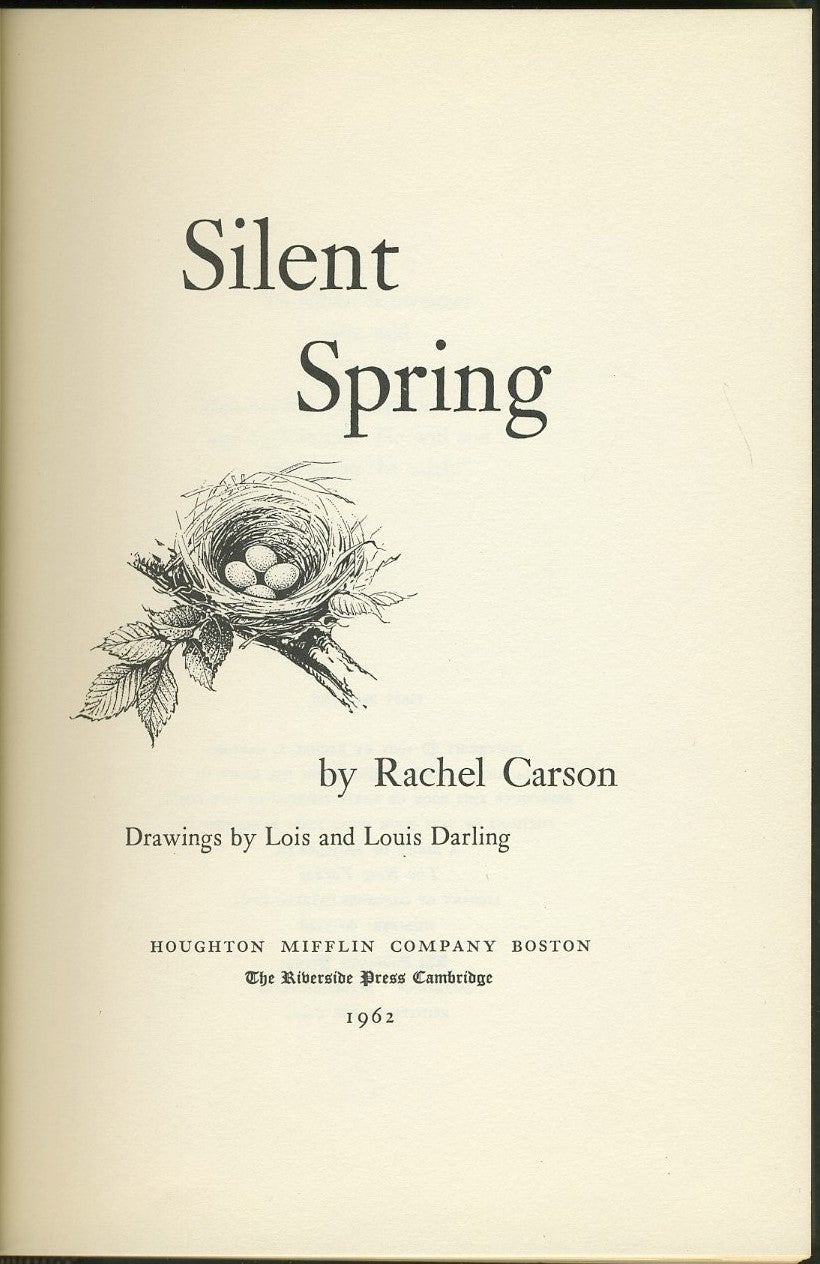
This is exactly what Rachel Carson asked herself in 1962, when she wrote this best-selling book warning of the perils of overexploitation and destruction of Nature by man-made chemicals. This scientist, underestimated, defamed even, on account of her gender, perfectly understood the natural cycles taking place in an ecosystem, and the role each organism, human and otherwise, played in their sustenance. By exerting her technological power over Nature, the human species is not only ignoring, but outrightly destroying the delicate balance that ensures the continuation of life, including her very own.
In a very beautiful way, even poetic, Rachel Carson provided in her Silent Spring plenty of accessible explanations, scientific proof and images to try to urge societies to develop a Nature-conscious approach in their everyday actions, consumerism habits and relationship towards each other and each living thing.
The fact that almost 60 years later we have still not listened and, much to the contrary, continue on our aggressive course against Nature, cannot entirely be attributed to Rachel Carson’s being a single woman in a male-dominated, family-centred society. As natural beings ourselves, and therefore part of the natural cycle, our ties to our origins seem to have been broken long ago, and to deepen with each technological upgrade.
Yes, technology may have helped us stay connected during the past isolating year, but it would be foolish to accept every technological development without a critical eye. Its power is only limitless insofar as the resources of Earth are, but if we do not take care of the latter, there would be nothing left to keep fueling the engines of the so-called progress. Not even ourselves. And this is precisely why this book remains unfortunately relevant in the present. I hope, and I’m sure that Carson herself would agree, that not for much longer.
 Woman in the making