…there was cement in her soul. It had been there for a while, an early morning disease of fatigue, shapeless desires, brief imaginary glints of other lives she could be living.
How could the life of a white middle-class European expat resemble in any way that of a black Nigerian migrant who is facing racism for the first time? Probably hardly, if at all. And yet, the first time I read this book, it spoke to me in many familiar ways.
The strangeness of Ifemelu, her out-of-placeness during the first months she is trying to find her way in the American society, her deep feeling of solitude are not unknown to anyone who has moved to a country different than their own, where new social norms and habits must be apprehended, where your identity is put into question and must be renegotiated if you are ever to (at least) survive in it—although the colour of my skin was never a part in the equation.
This book found me (among hundred others in a library) at a time when I was lacking a friend, and for three days I clung to it as if it were life itself. For three nights and three days Ifemelu became a reflection of my own self—or I of hers. Her girlish insecurities, her clumsiness around the new culture, her naivete mirrored my own. I too felt isolated, I too felt misunderstood; I might be a white in a world of whites, but I too felt different.
Quite unexpectedly, Americanah became my neverending story. Self-locked away from the world in my bedroom, I lived through Ifemelu’s (mis)adventures as if they were my own. I cried when she cried and was outraged when she was. Eventually, I found myself terrified of running out of pages for fear my own self would come to an end when the book did. That’s how intense my reading was.
I am not sure whether Adichie would approve of this strong connection. She did put into precise and beautiful words what it is like to be a foreigner, how it feels not to belong, and on those experiences, plus my condition as a young adult woman, I recognised myself in Ifemelu. Unintentionally I focused on our similarities and left out our differences. Yet, Americanah is also (and mainly) a powerful statement against structural racism and an invitation for everyone to reconsider their role in it. It is easy for me to ignore my whiteness and feel that a black heroine represents me. It is easy for me to believe that I understand how she must be feeling, that I share her thoughts on race and discrimination and inequality. But can I really? Ain’t I speaking from a position of privilege? Isn’t it patronizing to think that I can relate to what she is going through when my experiences are in no way determined by race?
Or maybe this is precisely the magic of Adichie: her mastery at generating empathy. None of the above questions would roam around and torture my mind had I not first develop that bond with Ifemelu, that fictional friendship that only a good story can elicit. We both were young, we both were foreigners, we both were women. That was enough for me to let me be guided through her path blindly. A path towards deconstruction and relearning.
I wonder whether Obinze (the male character in the novel) has the same power of attraction with men. Or is it only when you already know oppression that you are more able to recognize other oppressions too?
Then, although it was still the end of the story, I put it at the beginning of the novel, as if I needed to tell the end first in order to go on and tell the rest.
Memory is capricious.
At least mine is. It does not work with clockwork precision, but its errs and digresses constantly.
I can perfectly recall the way I felt when I read a certain book, like this very one, or reconstruct accurately that profound conversation I had on a night in a little lake town in Macedonia. Yet, the order of events in the book, the names of the people I had the conversation with, would escape me, the same as I find it impossible to remember who I saw one week ago, what I ate on Saturday, what I did yesterday… My way of remembering seems to be linked to emotions, rather than to factual information.
By the same token, when asked about a particular instance, say, my first memory or the most embarrassing one, or when required to name specifics—like a preferred author—, my mind goes blank, unable to conjure up anything from the depths of my lifetime recollections. And if I do come up with an answer it may happen too that, if asked again another time, my answers would differ, because they won’t stand some much on consistency as they will on my perception of things at a given moment.
My memory is capricious. It works at will and won’t be forced by anyone. Not even myself. And I have come to respect its rhythms and to accept that this is the way it is; the way I am.
For our way of remembering our stories says more about ourselves than it does about those stories, like Lydia Davis shows in this intimate masterpiece of literature.
We hear a love story through the voice of her protagonist. Everything we know, every detail, is from her own account. We see the lover through her eyes—perfect, beautiful, attentive—and the unfolding of their relationship in her chosen order, because it is in that order that the story gains meaning for her.
In essence, we hear her love story because, were the other party to tell it, we would be hearing a completely different one.
But we are not only being told a story. With all the flashes back and forth, the repetitions and the constant adding and cutting of details, what the reader is actually being given is open access to the very mind of the woman who is compulsively reliving her affair. The affair being over, her being older than her young lover, she cannot help it but question if what happened was worth it or shameful for her as an adult woman. Was the feeling real? Did it happen that way or the other? And so on.
Questions that pester the reader’s mind as the confusion of the protagonist, her agony, is passed onto us. She goes through the same memories over and over again, each time coming up with changed nuances, revised versions, recalling them through a positive or negative light depending on her mood; sometimes joy, others regret, despair or even pity take over.
That’s what it’s like to be a woman, Davis is telling us. Neurotic, insecure, self-doubting, obsessive. All because of a man. She could have avoided all pronouns; a few paragraphs into the novel suffice to reveal the gender of the mind we are inside of, the shape of her memory clearly fitting the mould of romantic, self-destructing love that is regularly incorporated into the woman’s psyche.
Magnificently, The End of the Story pushes us in front of an introspective mirror, and the question arises: how much of a memory is real, and how much is dependent upon our subjectivity? Probably most of it, as, in the process of remembering, we are building up too. A memory is therefore in constant evolution, never static, never, as it shows, to be relied on. And what one remembers as the end of a story, for another might be only the beginning.
One of the most valuable things I’ve learnt in the Camino is that you don’t shy away from the storm, you walk Right Into It.
The idea is not to wait on a sunshine that may take its time to come, nor to take a detour to avoid the storm altogether.
The idea is to keep on walking, facing whatever comes in the path you have chosen for yourself.
Let’s not be naive either. Navigating through a storm it’s not a pleasant walking experience. It takes resilience. It takes courage. It takes determination. Above all, one must be prepared. Or else, the venture could be fatal.
Measuring the risks and making sure you have everything you need to minimise them—from material to physical and mental tool—is crucial to come out through the other side unscathed (or almost).
A storm is a dangerous, whimsical, life-threatening phenomenon that must be approached in full awareness, its destructive power not underestimated. But it’s also incredibly beautiful.
When you come into it willingly, prepared, you get to enjoy this unparalleled force of Nature. You stand in awe at its magnificence. You look at it with renewed respect and calmness. You quit being afraid.
The same philosophy needs to be applied to every situation in life. Every fear you host and every battle you are faced with. It’s important not to turn away from them, but to keep on walking straight, always, ready to confront them when the time comes.
There’s a lot to be learnt and enjoyed once you have done so.
“But why should we have to be useful and for what reason? Who divided the world into useless and useful, and by what right? Does a thistle have no right to life, or a Mouse that eats the green in a warehouse?”
This is a story to be read over and over again. For Tokarczuk has managed to create a captivating, heart-warming thriller of mysterious murders which is, at the same time, filled with all the essential questions of our existence. At the centre of it, the right to live, and which criteria determine whose right this is, is examined.
As conductor of her story, our eyes and ears, Tokarczuk has conceived a character conferred with all the virtues societies tend to rank lowest in value: a ridden-with-sickness, eccentric, solitary middle-aged woman. She, and only she, will have the key to solve the wave of murderings taking place, but rarely will she be heard or even taken into consideration. After all, what could an old person know about such important matters, least if she is a woman? Least if she is talking about a righteous animal rebellion that would be the cause behind the incidents?
Indeed, animals and our relationship with them are at the core of the tale, its lines sprinkled with such a fierce defence of animal rights and a vindication for the safeguarding and respect of Nature that it can be easily placed within the ecofeminist philosophy. In the world vision of our protagonist, through her actions and beliefs, there stands an overarching, yet radical idea that human beings are nothing but another element in a complex ecosystem, too big for us to fully grasp, let alone control. And why should we even have the right to control it? she constantly questions the many men that wander through the story determined to ignore all of her warnings. Why do we believe ourselves entitled to stand above the other beings and dispose of their lives at will? Here the issue of usefulness emerges strongly. Usefulness as a man-made concept applied precisely to legitimise destruction of the natural world by human hands: only what is considered useful to our species is allowed to live.
Our charming old lady perfectly ticks the “useless” box if we are to accept the tacit social norm about what’s useful and what’s not. She is nothing but a nuisance for the police officers in charge of the investigation, her neighbours, the members of the hunting club, the Catholic priest and even the school’s headmaster, who deems her alternative teaching methods (consisting in treating children as intelligent and capable beings) inappropriate. Probably the mind with more clarity of all, she is nevertheless set aside and labelled with the unoriginal and completely stereotyped title of “crazy old lady”.
Countless are the women, in literature as well as in real life, who have been credited with such a title. Rarely do we see one as a main character in a positive light. A Nobel prize winner, Tokarczuk knew perfectly well that only a female voice could encompass the compassion, the agony and the rightful rage of the powerless, all at once. Only a woman’s body could freely transit in between the human world and the natural world with the certitude of being part of both. And an old body nonetheless. One gifted with the frailty of time and the patience of experience that surprises the sceptic reader with its tireless energy and countless capacities.
Ultimately, by entering this carefully constructed universe set in rural Poland amid a hostile season, we get to reconcile ourselves with the very concept of uselessness. In a society ruled by violence, vanity and power, it’s the small and humble spirits that survive. Could it be that the useless, the discarded, have something to teach us? In the bonds formed between our pani Duszejko and her loyal friends —human and non-human alike— we find that it’s in the mutual care and reliance on each other where their strength lies and their happiness is nurtured.
Maybe we have been looking at it wrongly for a long time, and the values that we have admired as useful, those coincidentally embodied in the victims of our novel, are only setting the course for annihilation of our species and this beautiful home we share with so many others. Our crazy old lady is reminding us that every form of life is precious in itself, and no artificially-established human criteria should make us forget that.
“Women are their own worst enemies. And guilt is the main weapon of self-torture . . . Show me a woman who doesn’t feel guilty and I’ll show you a man.”
Guilt is probably the default state of mind of any woman. We have this inherited ability of believing ourselves responsible for all the evils in the world, the negative feelings of others (funnily enough, not the positive ones), their misfortunes (but not their successes) and so on. The myths of Pandora, Eva, Lilith, and all the other sinful women who supposedly got in the way of supposedly righteous men are so embedded in the female psyche that they impact our perception of things —in spite of ourselves.
When the feminists of the 70s came to liberate us from these automatic culpability of ours, they did not expect that it could turn against them the way it did. For now we have the added layer of guilt of not being “feminist enough”. In a way, they only made it worse for women. It’s 2021 and the idea of being in a monogamous heterosexual relationship still fills me with guilt-ridden anxiety. Am I not a strong independent woman? What do I need a man for?, my feminist voice tells me. I know that there’s nothing unfeminist in being attracted to men or being in a couple with one, yet, in choosing the “traditional” pairing structure, am I not conforming to a conservative idea of love? To an old-fashion oppressive commitment? Have I fallen for the romantic love crap? And so goes the endless battle of self-reproach.
This guilt, this constant self-questioning which is explored throughout Fear of Flying, is probably the reason why Erica Jong’s character of Isadora is so appealing. A rambling and somewhat inconsistent mind, she presents all the features of the feminist prototype. On the outside we see her as this sexy, smart and self-assured writer who is in control of her life and body. But on the inside we discover that she’s all nerves and insecurity, afraid of “practically everything”, plagued with dichotomies and contradictions; a complex individual.
We access her inner conflict best when she is confronted with the unexpected possibility of living out her fantasy: an unbinding sexual encounter with an alluring stranger; the “zipless fuck”. This intrusion of fantasy into the reality of her dull but reliable marriage causes a maelstrom of emotions in Isadora’s spirit. Her certainty of wanting a passionate, short-lived affair wears off as she starts to think of the security offered by her husband, and the remains of their affection. Isadora’s conscience starts to override her desire. But does it prevail? None of the scenarios is fulfilling. In both she will win something she wants, and will have to forsake something she needs. Ever doubting herself, ever full of guilt, Isadora embarks on a deplorable trip of dissatisfaction and remorse.
For its portrayal of an erratic and imperfect woman, I believe this book to be a masterpiece of feminist literature. Through Isadora’s experiences and thoughts, the reader is presented with an intimate view of what it’s like to be inside the mind of a progressive woman in 1970, and also today. Most of Isadora’s worries and concerns are my own, her vulnerability and strength equal mine, and our desires do not differ that much. Alongside her we discover that freedom is an illusion, that we might mistake for love what is actually dependency, and that women are sexual too. Only the fear of flying is real. And guilt is to blame for that.
In the Camino you don’t advance always at the same speed. Some days you walk 30km and other days you walk just 15km. Then there’s the odd days in which you don’t walk at all.
Whatever the case, every day is important for they all add to the experience: with the longer walks you see the distance to the final objective, Santiago, shorten significantly, and you feel empowered by the might of your own body; the shorter journeys allow you to slow down your pace and to take a closer look at the surroundings, its inhabitants big and small, the people walking alongside and around you… You take it all in. You breathe it all in in deep big gulps.
The non-walking days though are probably the most precious, since you wouldn’t be able to walk at all without them; they make possible the continuation of the adventure ahead.
Every day is equally important in its own right, for they all give you something different. Obviously, there are better and worse days, terrible days and others which go perfectly fine. But it’s precisely the sum of them all that makes for the Camino the unforgettable, unregrettable, unparalleled whole experience that it is.
Arguably it’s due to its limited duration (about a month or so) that the appreciation of the pilgrim’s life is enhanced. But why don’t we aspire to perceive the events of our everyday life in equal terms? To accept our hectic days and our lazy days, our ups and our downs, as just necessary moments of our existence?
Eventually, we will get to where we need to go. We will reach the end of the journey sooner or later. Santiago is going nowhere. Neither is our end-day. What matters is what we make of the time it takes us to get there.
And every step, every second along the way it’s a meaningful part in the Camino that is our life.
As someone who’s lived close to Santiago de Compostela most of her life, and who’s been there several times, why would I walk over 770km East to West across the whole country to get there? I used to ask myself that very question whenever foreigners, knowing I am from Galicia, the most Western point in Europe, inquired whether I had done “the Camino”. Then, one day, amid a global pandemic and after 7 years of living with my back to that little piece of land where I come from and to everything that it has ever given me, this idea presented itself clear in my mind: I have to walk back. And, just like that, my Long Way Home started, by putting one foot in front of the other.
The simple goal was to advance slowly —with my body but also with my heart— towards the roots that had once hold me and nurtured me, towards the people that had so many times seen me come and go but never stay long enough. That was the idea, at least. But the Camino has its ways, and you might find along its course that your reasons for going in the first place are not the same reasons why you are actually there.
It is only now, a few days back into reality, that I’m starting to comprehend, if only slightly, bit by bit, as I relive my memories from the past 5 weeks of my life, all the things that the Camino was trying to tell me. Simple things, truth to be told, that would be more common were not for the fast-rhythm stress-ridden societies we live in. Simple but easily forgotten things that we need to be reminded of (or become aware of) every now and then.
And so I walked to remember, and I walked to learn and to question.
The thing with the Camino is, it is only when you’re done with the walking that the real camino begins.
“The claustrophobic sense of despair that has so often accompanied the colonization of public space and the loss of secure work begins to lift when one starts to think about the possibilities for a truly globally minded society, one that would include not just economics and capital, but global citizens, global right and global responsibilities as well”
Unlike teenage Naomi Klein, as she herself recounts on her book, I don’t recall ever having cared for the logos appearing on my clothes. Much to the contrary, whenever one logo was showing, I would bend over backwards to remove it, cover it, or I would simply not wear it. The young me was striving for uniqueness in a world too homogenised, in which the visibility of a logo made the person wearing it invisible.
It was my mother who introduced in my mind the idea that unbranded products were the same as branded ones, only cheaper, and in fact, if you’d look at where two similar products —one branded one and one “unbranded”— had been manufactured, it would prove her right: same distribution factory, “Made in China” most often than not. For this reason, we were never about brands in my family; from tomato sauce to shoes to smartphones, it would be the equation between quality and price that would convince us of which item to buy, never the name printed on it. But even then I was aware that this did not hold true for every family, and that almost everyone in my class did care for which firm was behind the things they owned. It was never about the brand per se, as this book makes clear, but about the values it represents: the status, the power, the “coolness”… because brands do not sell products, they sell “ideas”, a world of meanings and identities so carefully built around the social trends of the moment that everyone feels drawn to it to a greater or lesser degree.
And indeed, more than 20 years after the publication of No Logo, we still see how every major brand strives to be associated with the latest social movements, embracing the feminist, LGBTQ+, black lives matter and ecologic values in the greatest purple-rainbow-black-green-washing ever concocted by the marketing magicians. Likewise, almost every multinational boasts a CSR (Corporate Social Responsibility) department, in an effort to publicly advertise their brand as a do-gooder through glossy actions —such as awards, donations and tree planting (which their community managers make sure we all know about)—, while privately they continue to engage in the same harmful practices uncovered and denounced by Klein in her book: destruction of nature and indigenous communities, exploitation and abuse of a vulnerable, impoverished workforce, undermining of national and individual authority and self-determination. The difference between now and 20 years ago is that we don’t have an excuse to believe them anymore; we should know better.
Naomi Klein has provided us with a thoroughly-researched and powerfully-presented analysis on how the super brands 1) occupy all the public spaces with their ads, products and shops, reducing our chances to reunite and discuss free from their influence 2) sponsor all sort of events, thus deciding what and how can be shown and limiting the freedom of expression of the participants, and 3) reduce the number and quality of jobs in their countries and abroad, with the resulting precariousness and insecurity of which my very generation is well aware and suffers from.
But she is far from being the only voice. Then and now, many social movements and educators have seen to it that we are aware of how, as consumers, we have the power as well as the responsibility to challenge corporations whenever they put their profit before people. A recent example of it can be found in the speech Congolese Nobel Peace Prize awardee Denis Mukwege gave to an impassive white audience1: how, in order for us to keep enjoying newer and better smartphones, a big portion of the DRC population —mostly women and children— is systematically subjected to rape, violence and abuse.
Unfortunately, Klein’s hypothesis from 20 years ago—that the outrage of people as they discovered the modus operandi behind the global logos would fuel an anticorporate attitude that would in turn give way to a great political shift— never quite materialised. The tone in her final chapter was more optimistic and hopeful than reality has turned out to be, as she herself recognised2. To the big brands she investigates in her book (Nike, Shell, McDonalds, Starbucks, Disney, Coca-Cola…), many others have been added (Amazon, Tesla, Google, Apple, Facebook… to name a tiny fraction of the pie) that continue the path of human rights violations and overexploitation of natural resources.
The question remains, when, as consumers and victims of this corporate system, are we going to stand up to it once and for all? When are we going to start thinking globally and acting locally, i.e. consuming at the small shop in the corner, the nearby market or the artisan shoemaker, so that we might take the power away from the corporations to give it back to the community? Our spaces, our choices, our jobs depend entirely on that.
Pese a lo mucho que estoy disfrutando este periodo de mi vida en la zona de la costa amalfitana, no puedo ignorar la tristeza y el horror que me produce la transformación que ha experimentado la región desde hace poco más de un mes: las numerosas amplias playas del lugar, antes vacías y accesibles, están ahora cercadas y ocupadas en su totalidad por ringleras de tumbonas y sombrillas perfectamente alineadas que una debe alquilar si quiere gozar del privilegio de ir a la playa. Las hay quienes incluso reservan con un día de antelación, para garantizarse una buena tumbona en la línea de playa, entre el mar (más fresco) y el bar (mayor rapidez en el servicio de bebidas).
La idea de privatizar una playa, además de indignante, resulta del todo ridícula. Este paisaje de mar, arena y rocas, hogar de todo un ecosistema marino, es fruto de la mano paciente y generosa de la Naturaleza, motivo por el que debería ser objeto del debido aprecio, respetado y protegido como bien común (no exclusivamente humano). El hecho de que algunos individuos de nuestra especie lo hayan cerrado al público para tratar de enriquecerse a su costa —y que las autoridades locales lo permitan— tan sólo confirma lo infinito de la codicia humana, con su imparable onda destructiva, y cuán deshecho se encuentra nuestro vínculo con el mundo natural, al cual pertenecemos por mucho que nos esforcemos en fingir que no es así. Prueba de ello es que prefiramos sentir nuestra piel contra el plástico inerte, cocktail en mano, en un ambiente controlado y artificialmente organizado, a experimentar la naturaleza viva del entorno marino: jugar con los granos de arena entre nuestros dedos, sentir las gotas saladas que se evaporan al calor del sol, y la fuerza de las olas que arrastran nuestro cuerpo en el agua, caminar descalza por las formaciones rocosas (no libre de dolor), o dejar nuestras huellas por la franja de arena húmeda… todas ellas sensaciones que ninguna cantidad de dinero puede comprar.
Pero este paisaje de mobiliario plástico y simetría artificial en el medio natural muestra algo más que la codicia y la desnaturalización del entorno, es la imagen de la obstinación humana: la hostelería italiana se resiste a toda evidencia de cambio, y en su lugar se prepara para la llegada de turistas con el convencimiento de poder retomar su actividad habitual al cien por cien, como si nada hubiera sucedido. Y, en efecto, pese a que la amenaza del virus continúa al acecho, las turistas no se hacen de rogar. Son muchas las personas que se suben a un avión para escapar unos pocos días a la playa; su desesperación por tener vacaciones es tal que hasta parecen aceptar con alivio el tradicional impuesto revolucionario para turistas, ese que tasa con un coste excesivo todo producto turístico. Con o sin covid, las vacaciones continúan siendo el derecho inalienable de la clase media europea al que ninguna está dispuesta a renunciar. Tal y como sucedía en la “vieja normalidad”, satisfacer los deseos individuales está por encima de toda consideración social o ecológica sobre el impacto de nuestros actos. El turismo de masas ha vuelto.
Tantos meses de adaptación, tanto tiempo para la reflexión, y no parece que hayamos aprendido nada. Quizá no debería sorprenderme que así sea, pero esta vez, ingenua de mí, tenía mayores esperanzas en la especie humana. Al fin y al cabo, hemos sido partícipes de una demostración de solidaridad sin precedentes, al modificar nuestros estilos de vida para proteger tanto a seres queridos como a completas desconocidas por igual, lo que prueba nuestra capacidad de trabajar juntas por un bien común, de priorizar la persona a lo material. Además, se ha hecho evidente que el decrecimiento de nuestra actividad económica y el aumento de un modo de vida local permite una recuperación veloz de flora y fauna y reduce nuestra huella negativa en el planeta, hecho que debería llenarnos de esperanza, al tiempo que nos da pistas sobre las buenas prácticas para el futuro.
Por un instante, parecía que la vivencia conjunta de esta situación tan fuera de lo común estaba asentando las bases para una vida más comunitaria, basada en una ética del cuidado (de una misma, de otras, del planeta) por encima del individualismo destructivo. Pero basta un vistazo a la costa amalfitana, llena de gente de todas las nacionalidades, acomodada en una tumbona de pago, cocktail en mano, para comprobar con decepción que el modelo de mercado capitalista persiste, y que el egoísmo sigue guiando nuestro modo de vida. Business as usual.
In the South of Italy, during the warm months life unrolls mainly in the balconies, turning this suspended structure into the busiest living space of the house. Equipped with all sorts of gadgets and outdoor furniture, balconies become a window into the lives of its dwellers, from the teenage student who prepares for their exams to the smoking patriarch, the playing children or the dormant pets, a sketch of the rhythm of each family member is revealed to any neighbouring attentive eye.
During the months that my eyes have been part of this local landscape they like to pass time observing these comings and goings of people, spontaneous depictions of the Italian small-scale life. It is especially in the early mornings and late afternoons—the hours when the temperature is still bearable—that they regale with the activities of the most interesting beings who inhabit the balconies: the old ladies.
A short observation suffices to acknowledge that the Italian nonna—the grandmother, the matriarch—is the real owner of this setting. Here she takes notes of her surroundings, discerns the new and the old faces in the neighbourhood and ensures the stability of yet another day. Here she converses with other nonne to update each other on the most recent happenings, and small-talks with the nearby residents in a mutual daily recognition. Such brief exchanges often take the form of a particular sign language which unfolds as follows: the salute of a waving hand starts it off, then a sideways shaking hand answers that her state is so-so today, as it was yesterday, and as (she knows already) will be tomorrow, accompanied by a shrug of her shoulders that conveys resignation to this fact; on a third act, the most Italian gesture of all, the tips of the fingers touching each other with the hand facing upwards, which in this context signifies—I have come to understand—“what did you expect? That’s the way it is.” Like that, the conversation comes to an end. Tomorrow it will happen all over again.
In understanding this balcony code, one becomes aware that there is a covert liaison among these women, a network of sorts that provides comfort and support from the daily struggles, relief from the monotony of life, and that seems to be passed from the oldest inhabitants of the block to the next generations. For one careful observation tells of lives that, despite the age disparity, are condemned to a similar destiny: wide open balcony doors reveal kitchens in which women cook and clean while men eat, women sweep the floor and wash the dishes once the men are gone, women hang clothes of varied sizes that are clearly not their own, mothers and grandmothers look after the little ones of the house while they play outside… In essence, the presence of the women in the balconies is conditioned to the accomplishment of tasks. Among them, I am a rare specimen: a woman enjoying leisure time on the balcony; a foreigner.
Only the old ladies, retired but still responsible for the house work, have the benefit of dragging on a little while hanging the laundry, expectant to enjoy a little sunlight or the promise of a conversation. This is how I have managed to be somehow included in this circle of women, as an odd exception, born from the need to talk of my two neighbours, Signora Teresa and Signora Rosa, and their curiosity about my persona. Both of them, day and night to each other—one being the eternal pessimistic while the other is a ray of morning sun—, are deeply fascinating women who have lived through some of the roughest periods of their country (the War, the fascism and the post-war climate of insecurity and divide) and have nonetheless succeeded at providing for their families both through work and at home, while their respective husbands were mostly away.
Such an image is not unfamiliar to me: my very grandmother, when not older than I am today, was left alone for years with three children, my grandfather sailing away the seven seas to provide for them. Once I was around, her first granddaughter, I cannot remember a single occasion in which she was not finding any chore to do or someone to please, or rushing through the streets to go to the many precarious jobs she held in her old age, that were slowly robbing her of her health. Now, finally retired and with all the time in her hands, she continues to busy herself around the house, and she can often be found hanging the laundry in her garden or watering the many flowers and plants to which she tends. All those years, and still she is unable to dedicate a minute to herself. Probably, she wouldn’t know how to.
Despite their different nationalities, many are the similarities between the life my nonna and my two neighbours had—a life marked by scarcity that was especially hard on women, demanding too much of them and conceding too little—and continue to have: alone with their husbands, a waning health and unachieved dreams, they remain the care providers for their spouses and their common home, for their daughters and their grandchildren; the sempiternal backbone of the family life and the communal life. Had it not been for these women, the sweat and tears and blood they put in to carry through their difficult times, in a time when being a woman was the main hardship of all, I would not be here, in this balcony, calmly enjoying the summer breeze and receiving their tips for cooking pasta. None of us would.
How could we ever repay everything that they have done for us? Impossible. But maybe we could start by acknowledging and listening to their stories. Sometimes, just listening is enough proof of appreciation and respect. Listening says that we care, and after all the care we have received from them, this is the minimum we can offer them. But there’s more. From their experiences we can also learn everything that has changed for women since their time and everything that is left to be changed—as my observation of the surrounding balconies has shown. From her own balcony, Signora Rosa perfectly phrased it for me: “I have already done my part, now it’s on you.”
“Many people nowadays live in a series of interiors… disconnected from each other. On foot everything stays connected, for while walking one occupies the spaces between those interiors in the same way one occupies those interiors. One lives in the whole world rather than in interiors built up against it.”
As a teenager, me and my friends would spend hours walking around our hometown, a medium-size city off the northern coast of Spain. While updating each other on the weekly events, gossip and love interests, we would walk the whole city back and forth several times non-stop, barely paying attention to where we were going. In these dynamics, mind, body and space were all one, and the city was as much a part of ourselves, an extension of our bodies, as we were a part of the city, one of its many buzzing elements.
Many years have gone by since, and I have never stopped walking. And until I read Rebecca Solnit’s book, I had never stopped to consider why I walked at all. I simply walked. I walk to the supermarket, to work or to my friends’ place. I walk for 10 minutes or 3 hours. Up to the mountain or down to the beach, across fields and sometimes highways and past towns. For necessity, exercise or leisure. In short, if I can reach a place on foot, I will not use any other means, and anyone who knows me also knows that I trust nothing but my own two feet to flow around.
This book (which, by the way, was recommended to me by a friend after a day we had enjoyed a long walk) conceptualises the action of walking in its entirety: from how the idea of “going for a walk” and mountaineering started, to the architecture revolving around it, up to the political sphere of walking. To summarise it within a few lines would be a titanic work, plus it will do the book no justice. Suffice it to say that, as the great thinker, historian and writer that she is, Solnit invites us to reflect on how we occupy the outer spaces, as well as the inner ones, through the practice of advancing one foot after the other. She proclaims walking a collective activity, and not merely an individual one, that may produce social transformations, and dares to suggest that this once common mode of transport, nowadays almost forgotten in the big cities taken by speed and anxiety, may experience a comeback.
Indeed, it may be time to slow down and go back to feeling the soil underneath as we move along, to remember what it was like to be connected to the natural world we belong to. I have already mentioned in a previous post how during the pandemics our corporeality regained a self-conscious dimension, and many people could be seen basking in their walking, their one daily moment of freedom. Yet, the effect seems to be waning as the lockdown measures do. But if there is a common element across the history of walking that this book reveals is how it’s ultimately a small group of people —generally considered outcasts, misfits, or coming from lower classes— the ones who start the movement: from Wordsworth and other nature Romantics, to John Muir and his Sierra Club, to the French women who marched to Versailles; it takes one to create the inertia of a movement for others to follow.
Contrary to popular belief, Solnit makes it clear that walking is not about exercising (at least this is not its primary function, although it does have a positive impact on health, she stresses), rather, it is a way of connecting to our surroundings and to each other, much like my teenage self and friends used to do. Of course, one of the reasons we walked was because we had no money for other activities. Be it as it may, walking became an integral part of our friendship, so much so that even nowadays, the one time a year we happen to meet, we often find ourselves wandering around the city in the same fashion we used to, unaware of where we are going, not trying to reach anyplace, simply moving one alongside the other, walking and talking, thinking and walking, our paces creating a harmonic rhythm, our feet rediscovering the old pavement and roads and grassy and sandy paths, our bodies, the city and its landscape forming one close-knit reality. Connecting.
There is no denying that the past year or so has put a strain on our lives both at a physical and mental level, although the latter still has not received its proper recognition due to enduring stigma and most people have instead focused on the physical realm, one whose effects they can more visibly perceive and suffer from. The popularity of at-home workouts during this period exemplifies the increased awareness of body care and need for movement that being confined to four walls has brought about. Seemingly, it took a pandemic for people to start appreciating their body and the independence that it provides, a realisation that has led some to condemn the measures put in place by the states: the imposition of a lockdown and a curfew or the limited assembly rights are, in their view, an attack against their freedom of choice and movement. Likewise, they reject the vaccine or taking any medical test for they consider them a physical intrusion of the state into their individual bodies. As I hear these complaints coming from the mouth of a bitter man who claims governments are putting us all under chains, I cannot help but wonder: will men finally understand what it is like to live in a female body?
State terrorism against the corporal experience is the everyday reality for women. From childhood to old age, there exists an ideal image of what a woman should look like at every single stage of her life that may vary from culture to culture, but whose overwhelming constraints and aggressive demands remain the same. In trying to emulate that imposed image, women all over the world modify, deform and cause harm to their own bodies, as they deem the original version not good enough. Indeed, low self-confidence and a feeling of self-hatred is the natural result of this regime of terror that does not allow women to be themselves nor to feel good about themselves, along with many associated medical conditions that may have fatal consequences; as long as there prevails in society one ideal of how a woman must be —and in this regard, media and popular culture are extremely efficient weapons for the perpetuation of stereotypes—, our bodies are cursed to suffer trying to find the balance between that irreal image and our real self.
Some may argue that men too are under similar pressure, and it is true that in recent years the social expectations for the masculine looks are getting more demanding. However, those men whose aspect differs from the ads are not openly rebuked in the same way women are; for us, every public appearance feels like a trial in which we will be severely judged by dozens of strangers. This is the reason why we obsess over our aspect, though perfectly aware that whichever it is, society will always find a demeaning term to define us: to their eyes a woman may be a tramp, fat-ass, slut, prude, sassy, tart, un-feminine… an endless string of adjectives that deny women a dimension in which we can simply be.
But the intrusion of others in our bodies is not limited to the external image, it goes way, way beyond. It’s ancient history that one of the traditional fights of feminist groups worldwide (and sadly still very much alive) is that for abortion rights. In defending the right of the life-to-be to be born, the so-called “pro-life” groups and the many sectors in society who condemn the woman are imposing a shared imaginary in which an unborn life is more precious than the already-alive being that is the woman; stripped of her agency, the aggravated woman is severed from her individuality and reduced to just her body, becoming a subject of value only insofar she is a container of new life, a mother, and never as a full-fledged life herself. On the opposite side of the spectrum we find the so-called family planning policies which, pretending to be applied on the population’s best interest and as a tool for women empowerment, have in reality been used by Western states as a mechanism to keep control over certain regions of economic interest by forcing sterilisation on thousands of women.
Voilà another way in which society takes control over the body of women: science. Disguised as medical know-how, women have been systematically subjected to shameful and irresponsible handling by those who are supposed to take better care of them. When it comes to the birth control pill, for instance, many doctors in Europe will prescribe this cocktail of hormones charged with hundreds of dangerous side-effects to most women as the normal contraception, without considering any alternatives, even to those whose hormonal levels are perfectly normal. Such was my case. And even though after a year of taking the pill I had not developed any symptoms, I decided to discontinue its use, not thanks to good medical advice, mind you, but because I simply did not feel like myself with all those extra unnecessary hormones in my system, an argument I doubt most men and male doctors are able to understand.
There’s no doubt that the birth control pill remains the preferred contraceptive method in privileged societies because it demands nothing from men, while it is the women and their bodies who are assuming all the risks. Unsurprisingly, throughout the history of medicine, countless are the examples of how unfounded ideas regarding the corporeality of women have been passed as scientific evidence for the convenience of men, as a means to subdue us and prevent us from participating in public life alongside them; time and time again these “facts” have been proven false, but not before whole generations of women had to suffer their tyranny. For instance, there are countless maladies whose symptoms for the xx individual are unknown or tacitly accepted to be the same than for the xy when such is not the case (the popular example being the heart attack as represented in films), resulting in higher risk of death and ill-treatment for the female population, which goes to show how often the diseases affecting us have been under-researched for lack of medical commitment to our different physiological experience, if recognised at all as an illness —we are all a bunch of hysterics after all. Similarly, menstruation (of which I have spoken widely) and pregnancy, two biological experiences that are integral to the condition of females only, remain a taboo in many cases and are filled with misinformation and secrecy, entailing consequences for women that compromise more than their health. One last outraging proof that I will mention is how women have been denied a sexual dimension (and desires) until very recently, and it is only thanks to feminist activists that research on the female sexuality and anatomy has been done to debunk the freudian conception of the deviated and masochist woman; until then, sexual pleasure was reserved for men.
The list of control mechanisms that society holds over the female body is endless, but the bottom line remains that women were under chains way before covid striked, deprived of bodily autonomy and the freedom to live and enjoy their physicality in their chosen way. Those who oppose the recent measures and perceive vaccination as a physical aggression are no martyrs nor rebels, they are just a crowd of selfish privileged individuals (and I dare say, mostly men) who wish to keep doing as they like without considering the well-being or integrity of others. If their fight actually was about the right to self-determination, where were they one year ago, two years ago, twenty… when women were rallying for this, putting their flesh on the line? For them it’s just a puncture and staying home at night, for us it’s every second of our existence that is threatened, constricted, surveilled. Before, meanwhile and probably after. They have no idea what lack of freedom means.
“Don’t think of night as the absence of day; think of it as a kind of freedom. Turned away from our sun, we see the dawning of far flung galaxies. We are no longer sun blinded to the star coated universe we inhabit.”
The ability to make you look at things differently, with renewed interest and appreciation, is precisely the main achievement that Diane Ackerman conquers in her comprehensive analysis of the five main senses.
Not only have I been reacquainted with my deep sense of smelling and my fine hearing, the sensitivity of my skin or the many colours and tastes I am able to tell apart, but with every chapter I have travelled through time and space, from the emergence of life, across civilizations and cultural traditions, marvelling at how extraordinary the human body is, how absolutely intricate yet functional, how altogether miraculous that it should work in the way it does.
Often we take our physiology for granted and hurry along through our daily lives, preoccupied solely with our minds. Ever since rationality imposed itself as the new paradigm we have burdened ourselves with a strive for efficiency and productivity. Hence, we think of our bodies only in operational terms, as a means to an end. We rarely pay attention to our physical functions or needs, and it is only when one of the parts fails that we do spare a thought for it. Likewise, our senses are mere tools that we employ to fulfill a specific goal in the realm of the rational: we use our touch to interact with the gear we need in our jobs, we keep our eyes glued to screens for hours on end, unaware of everything going on around them, and we cover our ears with headphones and loud music in an effort to cancel out the outside world; when we smell is only by accident (some wall that has just been painted, petrol filling the car tank, the cake that burnt in the oven…) and eating is just a mechanic activity we do in order to maintain our energy levels so that we can continue working.
By delving deep into each sense, this book invites us to rethink the way in which we use our bodies, acknowledge how neglected they have been, and realise how much more they can offer us. A whole new world is ours to be discovered if we only purposefully attempt to sense it. Our realities can be greatly enhanced if we pay more attention to the sounds, smells, tastes, colours, textures and shapes that surround us, not only during a trip in nature, but right here and now, at the exact spot where we are.
I dare you to read this book and not be in awe at your own body after every single chapter. I bet by the end of it you will never think of your usual surroundings as dull and bleak again, and of your nose, ears, mouth, eyes and skin (the biggest organ of the body!), and everything else that forms the physical you, with indifference. Most probably, you will find yourself playing with your senses, pushing their limits and learning how much richer life becomes when sensed and lived with the whole body.
A few examples —the smell of fresh coffee in the morning, a live version of your favourite song, the taste of a home-baked brownie, the warmth of your lover’s skin or the first light of dawn that enters through your window— suffice to understand how much we would be missing out without our senses. Do not wait for them to weaken before you start valuing them every day. This is what this book is all about.
It’s one week into the spring in the Northern hemisphere. We have been awakened from the winter lethargy by the chirping of birds and the sweet rustling of the leaves-filled trees, our noses drenched in the many perfumes of blossoming flowers and the freshness of the fruit and vegetables sold at the markets. Considering our curtailed freedom of nowadays, how would we even carry on had the birds not returned, the trees not lived through the winter, the flowers not bloomed, the fields not been covered in bountiful harvests?
This is exactly what Rachel Carson asked herself in 1962, when she wrote this best-selling book warning of the perils of overexploitation and destruction of Nature by man-made chemicals. This scientist, underestimated, defamed even, on account of her gender, perfectly understood the natural cycles taking place in an ecosystem, and the role each organism, human and otherwise, played in their sustenance. By exerting her technological power over Nature, the human species is not only ignoring, but outrightly destroying the delicate balance that ensures the continuation of life, including her very own.
In a very beautiful way, even poetic, Rachel Carson provided in her Silent Spring plenty of accessible explanations, scientific proof and images to try to urge societies to develop a Nature-conscious approach in their everyday actions, consumerism habits and relationship towards each other and each living thing.
The fact that almost 60 years later we have still not listened and, much to the contrary, continue on our aggressive course against Nature, cannot entirely be attributed to Rachel Carson’s being a single woman in a male-dominated, family-centred society. As natural beings ourselves, and therefore part of the natural cycle, our ties to our origins seem to have been broken long ago, and to deepen with each technological upgrade.
Yes, technology may have helped us stay connected during the past isolating year, but it would be foolish to accept every technological development without a critical eye. Its power is only limitless insofar as the resources of Earth are, but if we do not take care of the latter, there would be nothing left to keep fueling the engines of the so-called progress. Not even ourselves. And this is precisely why this book remains unfortunately relevant in the present. I hope, and I’m sure that Carson herself would agree, that not for much longer.
Last Sunday, when I got home in the evening, I had to handwash my knickers and trousers as they were soaked in blood, my menstrual blood. This incident, familiar to every single woman in the world, could have been perfectly avoided had I been able to use an adequate facility, permitting me to change my menstrual protection within a sensible timeframe. But this was, unsurprisingly, not the case.
On a usual day, feeling the tragedy approaching, I would have turned to a nearby bar or restaurant and ordered the cheapest item on the menu, probably a coffee, which would have granted me the utilisation of a comfortable, warm restroom. Yet, with all bars and restaurants closed on account of the measures to mitigate the spread of the coronavirus, this possibility was off the table. Going back home was not an option either, as I was in a town sixty-five kilometres, or one-hour train, away from mine. The urgency took hold of me. I could feel my tampon’s exhaustion giving way.
At this point, I was in despair, utterly uncomfortable and dreaming of being back in my apartment. Why did I ever leave it in the first place? I blamed my poor judgement for finding myself amidst this situation. I should have known better than to give in to the pleasure of a one-day trip, especially during a pandemic, when on my period, and stayed home for safety instead. To make matters worse, I was not alone. I felt not only embarrassment, but also guilt, dragging my companion from one street to the next in a desperate attempt to find relief.
The realistic part of me had no expectations of finding a public toilet, simply because they do not exist, as experience has proven to me repeatedly. And yet, hope reappeared in the next corner when I spotted a petrol station. That should do it, I thought, petrol stations usually boast free restrooms among their services. But, to ensure continuity to my nightmare, there were no toilets to be seen and when I inquired, the only (male) worker on duty at the time denied having any available (meaning that he would not open the staff bathroom for me and make an exception).
Disconsolate, we resumed our roaming of the streets until encountering what seemed to be the only working business in town: a supermarket. This time it was a woman whom I asked for the favour of ending my suffering, even knowing the unorthodoxy of my demand, but this time, too, she displayed no sympathy, despite us being the same gender and thus familiar with the problems of our kind. She could not, or would not, suggest any alternative. No sisterhood was manifested that afternoon. No human compassion was demonstrated.
It was clear to me that it was time to go back home. Luckily, the train station was not far (of course, no toilets were available there either) and the train, delayed by twenty minutes, happened to be a modern one where, finally, I could satisfy the needs of my menstruating body, two hours too late.
Normally I would not share such a detailed account of my intimate mishaps, yet, as much as I am certain that the distress of this story resonates with the majority of women out there, who therefore need no such account, I equally know how entirely ignorant men seem to be about the afflictions proper to our gender, to the point of indifference, and it is time they become aware.
It has been noted innumerable times by several (female) authors1 how categorically different the social treatment of menstruation would be were the men the ones who bled. But because it is us, women, the inconsequential half of the population, the issue has never received its due attention or remedies. We are, once again, punished for our differences.
Our toileting needs are greater than men’s, and not only menstruation-wise. For instance, women are over thirty times more prone to having a urinary tract infection than men are2. I have had it several times. All my female friends have had it at least once. Yet, the only free public toilets I have ever seen across Europe (with the exception of some French cities) are urinals, which are, of course, solely intended for those endowed with the privilege of peeing standing. Men have, therefore, the favour of biology on this issue, as well as that of urban engineering, social acceptance and the governing bodies who made the decision to legalise street peeing in some allocated spots —as long as you have a penis, that is.
Society has once again failed women. But capitalism has conveniently figured out a remedy. For starters, it has liberalised our periods by giving us the power to choose from a wide variety of colourful menstrual products, after some businessmen smartly worked out the profit they would make from women’s monthly bleeding —let us not forget how costly these products are as none of them are considered first-necessity goods. Secondly, as I mentioned before, the lack of public facilities is balanced out by the great number of local establishments of food and beverages, where you just have to order a drink and the bathroom is all yours.
Indeed, it is just a matter of spending money on every occasion our bodies are in need (which could easily be every four or five hours).
What transpires from the above is that the satisfaction of women’s hygienic needs is constrained by gender as much as it is constrained by class. Women across the globe are already paid less than men3 and, on top of that, we are expected to allot a quite significant sum of money from that reduced amount to cover our bare necessities. The woman who cannot afford to buy her right to attend to her body’s demands when in public will simply not leave the house; she will remove herself from society, thus perpetuating the existing stigma around what for a long time was referred to as “the curse” (and it still is in some religions).
Undoubtedly, this self-confinement, by all means appalling, will not have the same impact on everyone; for some of us it will simply mean forgoing a planned trip or a day at the beach, whereas for a big proportion of the female population it actually entails dropping out of school or missing a day of work, with the consequent loss of income for that day’s worth. I think it is safe to say, whenever that is the case, that our menstrual health should not be regarded as a women’s issue. It is actually a social issue and an economic issue, as well as a health issue, the more reason why ensuring the provision of and access to public toilets should be paramount on every government’s agenda, which is to this day not the case.
While our specific problems are not contemplated and addressed alongside those of men, women’s capacity to participate in society and our ability to act as autonomous individuals in a world that already defies us in every possible dimension will continue to be undermined. Considering that menstruation is a natural process that happens, on average, once a month for a lifespan of about fifty years to half of the world’s population, it is high freaking time society recognises women’s needs as human needs and ensures that, regardless of economic or geographic situation, women can satisfy their needs with dignity and without it taking a toll on our lives.
Our bodies are not a cage. It is society that has built a cage around them.
The first months of this year have been a time of unrest and worry, but when I woke up this morning with a bloated stomach and cramps, and I motioned towards the toilet with the certainty that I would see red in my pants, all the distress of this stretch was instantly vanished: after a long-felt absence, my period was back.
I vividly remember the day I had my first period: it happened during the summer holiday, I was about twelve and sleeping over a friend, 30km away from home. Her parents were going to take us on a small trip the next day, but the trip would never happen. My morning visit to the bathroom revealed blood in my urine and a slimy substance between my legs that got me into a state of panic. For a few seconds, the shadow of a severe illness invaded my thoughts. My parents were immediately called to my rescue, and one hour later my mother appeared with a book about the body under her arm and my first pack of sanitary towels. Overnight, my body had changed without any warning signs.
Back at school, I learned that some of my friends had also had their first period over the summer. In a very subtle way, unspokenly, we felt united in our shared experience, one that was still painful and greatly unintelligible, but which imbued us with a mystified pride over our more developed bodies, as we perceived them. A line was drawn between those who remained “girls” and those of us who had become “women”.
Woman is that seemingly harmless construct by which naive little girls are charmed by and aspire to when growing up, completely unaware of the meaning that lies behind.
That sentence we hear everywhere after our first menstruation, “you are now a woman” is how, for centuries, society talked our gender into acquiescing to the whirlwind of achings and hormonal changes that our bodies would undergo from that moment on; suffering, therefore, became synonymous with the condition of being a woman. “You are now a woman” stands also as the argument to prompt us into a biological destiny of life-bearing, maybe not immediately, maybe not after having completed higher education, yet, eventually, we are expected to become a mother, and deemed a failure if we do not. The prerogative of choice is reserved to the other half of the population.
Shaped by this two-fold affirmation, we slowly learn the trap that is the female body. Menstruation hence becomes a monthly nightmare for most of us, pregnancy being its only escape, and even then, temporarily.
With such a prospect, the controversial relationship women have with their bodies should not come as a surprise. More than a decade has passed since my first menstruation and my perception of my body has been profoundly transformed. From that little girl afraid of bleeding to death, I had a bitter body-hating teenage phase in which I could not bear the injustice of biology towards the female sex. Amid this state of confusion and rage, some generalised —but false— beliefs result especially harmful, such as considering menstrual pain a punishment to women for allowing healthy mature ovules to die unfertilised. It would take yet a few more years for me to reconcile with my body and to accept menstruation as a natural and necessary process.
The old proverb that predicts that wisdom comes with time is even more true for one’s own body. It takes patience and self-indulgence to recognise and to understand the signals of the body. One of the most important learnings I have had to do was that an absence of menstruation was indicative of an underlying problem: be it stress or unhappiness, a failure in my natural hormonal cycle has always meant severe unrest in my mind. Sometimes life goes by in such a rush that we barely take a moment to look where we stand, but my body, by modifying its usual patterns, urges me to make some qualitative changes in my life.
Ever since I have understood this, having my period is a cause of joy and tranquility. In fact, I no longer look at the expected date in the calendar with fear and anguish, instead, I make sure to have a pack of tampons ready and some chamomile tea, and I go about like any other day.
Another magnific perk of menstruating no one talks about is the increased creativity one exhibits. During my premenstrual and menstrual days I am more sensitive to the external stimulus and find inspiration in almost every little thing. My writings, my drawings, every single act of creativity, as well as my personal comprehension of the world, is only possible through this deep connection between body and nature that my excited hormones fuel. This very text has been written under the influence of blood. Feelings and senses are exacerbated to take in more. I have no doubt most women would agree that sex is better during those days, too.
I wish as a child someone would have told me all of this, so that when the first drop of blood appeared, I could have appreciated its value with contentment rather than fear. Menstruation does not mean death, as some sectors of society still try to convince us of. On the contrary, it is a part of the cycle of life that our female bodies carry within and, as such, it is our birthright to relish this almost mystical power that Nature has endowed us with, to do and create with it whatever we, women, choose.
Ahora que mi trabajo se ha visto interrumpido por las circunstancias que estamos viviendo, dispongo de todo mi tiempo para usar a voluntad, por lo que, sin dejar de lado un par de cursos en la universidad (que sigo a distancia), me estoy dedicando a reducir esas listas de películas y libros por descubrir que he alimentado durante años.
Muchos de los títulos pendientes se corresponden con clásicos o creaciones de culto que toda amante de la cultura “que se precie” debe conocer. Otros son recomendaciones de amigas, de otras artistas, o los he sacado, a su vez, de listas de internet. Ser una persona “culta”, hoy en día, es todo un reto: tienes que estar familiarizada con toda la producción artística, desde los antiguos griegos hasta lo último de Marvel, conocer a los defensores y detractores del psicoanálisis (más prolíficos que la propia producción freudiana de la que parten), y ser capaz de nombrar tres directores de cine asiático independiente.
Sin embargo, pese a mis deseos de empaparme de cuanta cultura me sea posible, hay un elemento común en todas sus manifestaciones que me genera cierto rechazo, y es que la cultura es eminentemente masculina.
La cultura es un producto del hombre. No del ser humano, no. Del hombre. La mujer poco, o nada, ha tenido que ver en su creación y desarrollo, pues su participación en la misma ha sido vetada, o convenientemente borrada de los anales de la historia. Como en tantas otras ocasiones, no se trata de una falta de talento o de capacidades por parte de las mujeres. Si las estructuras existentes en las sociedades son patriarcales, ¿cómo no va a serlo toda la producción cultural que de ellas resulte?
Se deduce así que lo que entendemos por cultura, es, por definición, machista, ya que en todos sus siglos de creación ha estado alimentada por los hombres y su percepción androcéntrica del mundo (en donde, como su propio nombre indica, el hombre se sitúa en el centro de la sociedad, siendo “hombre” equivalente a “humanidad”, mientras que la mujer queda reducida a simple figurante). No es casualidad que los grandes artistas de la historia —directores de cine, escritores, pintores, poetas…—, sean siempre hombres. “Las mujeres tienen que estar desnudas para entrar en un museo”, indicaba el colectivo Guerrilla Girls, denunciando la falta de mujeres artistas, que sí parecen, sin embargo, triunfar en el rol de musas. A lo largo de la historia, los hombres nos han reducido a objeto de contemplación; ellos son creadores, nosotras, creación.
Las implicaciones de esta ausencia de la mujer en las Artes van mucho más allá de una desigual representación de los sexos; el imaginario colectivo resultante refleja una realidad alienada, carente de referentes femeninos con los que una mujer de la vida real se pueda identificar. Admitámoslo, ¿cuántas de nosotras nos reconocemos en las representaciones de la “cultura general”, en donde las mujeres son superficiales, pasivas, cuerpos vacíos que esperan ser llenados por un hombre? Si, durante siglos, han sido exclusivamente los hombres quienes han detentado el poder de crear, no es de extrañar que las imágenes resultantes muestren la realidad desde la visión masculina, obliterando aquella de la mujer.
La importancia de las imágenes no se limita a su capacidad de reflejar la realidad, sino que, a su vez, contribuyen a los procesos de reproducción de la misma, conformando (y limitando) la visión de quienes las observan. Por tanto, para las mujeres de la vida real será muy difícil pensarse de un modo distinto a como lo recoge el imaginario social. Incluso ahora que, al fin, más y más mujeres llegan a convertirse en creadoras, sólo unas pocas logran romper con las imágenes institucionalizadas; la mayoría, para poder alcanzar tal estatus, ha debido incorporar las reglas creativas imperantes, a saber, aquellas ideadas por los hombres. Todavía se hace de rogar una ruptura con la tradición cultural androcéntrica.
Como feminista y amante de la cultura, sufro grandes contradicciones internas sobre qué hacer ante esta evidencia. Me resulta imposible ignorar la carga machista presente en prácticamente todos los productos culturales aclamados por la crítica, incluso en muchos que otrora disfrutara; los encuentro tediosos, repetitivos, en ocasiones ofensivos… en especial, desde que he aumentado de forma consciente mi consumo de obras de creación femenina.
Lo que comenzó como una auto-imposición para equilibrar mi educación cultural y compensar años de dominio masculino, se ha normalizado hasta tal punto, que en los últimos meses he rehuido de toda creación firmada por un hombre, por falta de interés. En el trabajo de ellas he hallado un extenso universo al que sí pertenezco; en sus relatos encuentro voces que podrían ser la mía, experiencias que forma parte de la cotidianidad de ser mujer, personajes del mundo real, imperfectas, desorientadas, que no pretenden tener todas las respuestas, personajes con proyectos de vida propios y suficiente autonomía para tratar de llevarlos a cabo.
Las creadoras femeninas enriquecen la cultura con temáticas y puntos de vista nunca explorados por la tradición masculina, sus obras se alejan de las grandes epopeyas varoniles para dar vida a historias íntimas, cercanas, que apelan a lo más humano que hay en nosotras.
¿Significa eso que debemos descartar toda la producción cultural anterior por su sesgo machista? Sin olvidar que sí ha habido algunos hombres que han sabido representar el otro lado de la sociedad, ignorar la cultura desarrollada por el hombre supondría suprimir toda la historia de la humanidad. En su lugar, conviene que adoptemos una perspectiva crítica hacia todo el panorama cultural y que abramos la puerta a todas las voces creativas, no sólo la de los hombres. La idea misma de “cultura” resulta cuestionable cuando la realidad de la mitad de la población mundial permanece sistemáticamente excluida de ella.
Given the present circumstances, my job interrupted, I currently have all my time to use at will. Without neglecting a few courses I still follow (online) at the university, I spend the majority of my time trying to shorten the endless “to-watch” and “to-read” lists that I have been feeding for years.
Most of the titles correspond to classics or cult oeuvres that every so-called culture-lover is meant to know. Others include recommendations by friends or artists, or have been retrieved from internet lists (such as “100 novels everyone should read” and “1000 films to watch before you die”). Being a “cultured” person is not an easy task: it requires being familiar with the evolution of arts —from the ancient Greeks to the last Marvel film—, knowing the work of defenders and detractors of psychoanalysis alike (in itself greater than the original material written by Freud), and being able to name at least three Asian directors of independent cinema.
However, in spite of my passion for culture in all its forms, as I delve more and more into feminism, I regard cultural production with greater skepticism, it being eminently masculine.
Culture is the product of men. Not humans, but men. Women’s contributions to culture have been either dismissed or conveniently effaced from the annals of history. As is many other occasions, it is not a question of women having poorer talent or abilities. If the existing structures in our societies are patriarchal, it is beyond doubt that the resulting cultural production will also be.
From this fact, it transpires that culture is sexist by definition, having been solely fed by the works of men over the centuries and their androcentric values (by which “man” becomes synonym with “humankind”, placing men at the centre of the picture, while women remain silent in the background). It is no coincidence that the great artists in history —writers, directors, painters…— are all men. “Do Women Have To Be Naked To Get Into [a] Museum?” the Guerrilla Girls group rightly asked, condemning the lack of female artists, all the while remarking how it is mostly women who fulfill the role of muse. Throughout history, men have reduced us —women— to nice objects to look at; men are creators, women are created.
The consequences of women’s lack of access to the Arts are not limited to an unequal representation of the sexes: the resulting collective imagination depicts an alienated reality in which women are left without female role models to look up to. Admittedly, none of us feel represented by the recurrent female characters in cultural production: superficial, passive women, empty bodies waiting to be filled by a man. Since men have dominated the cultural scene for centuries, it comes as no surprise that the resulting images show reality, and women’s role in it, exclusively from the masculine point of view.
The power of the shared images lies in their ability to mirror the reality while contributing to its reproduction: they shape (and therefore limit) our understanding of it. It will be thusly difficult for the women in real life to conceive themselves differently from the women as portrayed in the social imagination. Even now that women have a better chance of becoming creators, few manage to break free from the institutionalised images. Understandably, most of them continue to work along the lines and values imposed by men. The androcentric cultural tradition is yet to be dismantled.
As a feminist, I am at odds with my cultural consumption. Most of the acclaimed cultural works come across as blatantly boring, unoriginal or even insulting for women, including some —I admit— I used to enjoy. More so since I have deliberately turned to the works of female artists, as a means to achieve a balance in my cultural knowledge, thus far significantly dominated by men.
The works produced by men pale in comparison to the bright universe women have forged. Contrary to the male tradition of heroes and epic motifs, they give life to a more intimate, heartfelt narrative that appeals to our deepest human nature; their stories are filled with voices that sound like mine, female-specific experiences of daily life, imperfect characters that do not have all the answers, characters with aspirations of their own and agency to pursue their goals. Culture results greatly enriched from the themes and points of view put forward by the female creators. Theirs is a culture I belong to.
Therefore, given the sexist bias in culture, should it be rejected for the sake of inclusivity? In doing so, we would be effacing the entire history of humankind (including the few instances in which men succeeded in reflecting the female perspective in their art). What we should do, instead, as gender-bias awareness increases across societies, is to ensure all the creative voices have room for expression, in order to produce a culture that encompasses the diverse viewpoints of our especies, and not just one. The very idea of “culture” is at stake if the reality of half of the world’s population is systematically excluded from it.
Fiction has never been so much surpassed by reality than at the present moment. The most brilliant mind in Hollywood could not have come up with a better script than the one History is writing for us, with the novel twist that for once the focus of disaster is not exclusively located in the United States, as the big screen has accustomed us all to see; on the contrary, thanks to globalisation, the whole world is involved in the lethal plot.
However, let’s not over-dramatise. This is in no way the end of humankind, nor a zombie apocalypse scenario, even though the pale skin from days of confinement and the brain numbness from watching too much Netflix might make us look like one. Our species has seen worse, this is just one more test to overcome, but one that may unite humanity in a common effort or, conversely, greatly accentuate the inequalities that separate us. It all depends on us. Whatever it may be, there is no denying that we are living interesting times in which the existing structures —political, economical, social— as we know them, may cease to exist. The current events are not only revealing fundamental deficiencies in the system, but may contribute to resetting the priorities on the political agendas worldwide (call me an optimist).
We are already seeing communist and capitalist governments alike implementing similar lockdown measures in order to contain the pandemic, with varying degrees of success. Seemingly, the collectivist culture of communist regimes —together with the tight control of the State— has proven more efficient in keeping people away from the streets, while, ironically, the individual freedom we hold so dear in the capitalist West has cost us a longer confinement period: minutes after the Prime Ministers of France or Spain had finished addressing the nation to announce the state of alarm, citizens of both countries could be seen occupying the terraces or calmly driving to their holiday domiciles. Far from siding myself with authoritarian regimes, these scenarios should spark a debate on social solidarity and the fine line between individualism and egoism. Our collective well-being relies, now more than ever, on our capacity to make decisions based on what is best for those around us.
With regards to the economy, it’s remarkable —but not in the least surprising— that pride neoliberals, in the opposite spectrum of public mediation, are now begging the states to intervene in order to safeguard the market. Multinational companies and well-to-do entrepreneurs, sometimes richer than entire countries, demand to be protected so as not to lose profit. All the while they let go of their employees, who increase the number of people filing for unemployment, therefore creating an even bigger strain on governments and a longer recovery period of their economies.
The economic system depending on State intervention is not unprecedented: less than a century ago, the Keynesian measures succeeded in reviving the US activity after the crash of 1929. Far from having learned our lesson, and despite the establishment of welfare states, we have allowed the economy to determine the global political programme, thus keeping the social needs unattended. Surely the current medical crisis will have a long-lasting toll on the economy, the severity of which is hard to predict, but it’s certain to hit harder in already depressed areas. Just like after 1929, this could be the perfect opportunity to try out a new system where social prosperity —and not money— is at the centre.
Never a believer of conspiracy theories, I want to think this is a timely disaster that will open up a path for renovation. What if the conspiracy has not been orchestrated by powerful governments or scientists in secret bacteriological labs, but by something much bigger and much more powerful? If you have seen the images of deserted cities where wildlife is slowly taking over, or the huge decrease in pollution levels registered since the beginning of this medical crisis, it is not so foolish to think that Nature is behind it all.
Scientists have been warning of the irreparable effects of human activity on the environment way before Greta Thunberg was around. Yet, only recently have individuals and governments alike began to really listen and implement some comprehensive measures. Entire species have been extinct, ecosystems destroyed, to make space for the oversized human race and our noxious consumerism habits. Our egocentrism knows no limits, and we have persevered in the exhaustion of the very resources that guarantee our existence, somehow convinced that we are endowed with a birthright to own the Earth and reign over every living organism.
But Nature knows best and has deployed its own self-protection mechanisms against the worst virus ever seen: us. It is no coincidence that the current malaise affects mainly the elderly and the weak (natural selection at its best), leaving the innocent infants of the species practically untouched. The virus seems to be freeing the Earth from some of the weight of overpopulation while indirectly serving as a reminder of the vulnerability of our human condition, a reminder that may in turn contribute to revalorise life above materialism. In a somewhat twisted way, the illness is blurring the categorisations we have created for ourselves and making us all equal, forcing us to look out for each other without distinction.
How the world will look like when all this maelstrom is over can only be speculated. All the outcomes remain possible. In my mind, I want to believe that something good will come out of this, that we will emerge humbler, with some lessons learned, and the opportunity to create a new, fairer order of things in our hands.
Who am I to write a blog?, you may be wondering. Why would anyone bother to read a piece of someone else’s life? After all, everyone has their own story to tell. What makes mine special?
Nothing, would be the answer. Nothing, and everything.
My story of a middle-class*, educated, white European girl is no different from most other girls’s out there, nor more (nor less) extraordinary. Many similar stories to mine have been written, and many more surely will. The only argument I can put forward in favour of this one is that it is entirely mine, based on my personal experiences, knowledge and reflections, and therefore, unique. Because there are not two lives that are equal.
As you might have guessed, considering the categories I have listed above, my situation is a quite comfortable one. I can count myself among the privileged part of the world, my only difficulties stemming from having been born a woman —a concept that, throughout this blog, I will attempt to dissect. I should almost be grateful that this is the sole discrimination I suffer from, although not one to be disregarded in the least: my experincing the world as a woman has had a tremendous impact in the building of my identity. Yet, it remains also true that women are half of the world’s population and that, thanks to the feminist movement, an increasing number of women are finally telling their stories in every possible way they are able to, which includes writing.
If that is so, what value can I add with my content?
While this blog may appear unoriginal (particularly if we consider how easy it is to create one) I can argue in my defence that I’m no stranger to writing: I have been keeping a diary for as far back as my memory stretches. Should anyone be interested, I could probably write a full autobiography, from what I used to eat at the age of six, whom I had a fit with when I was ten, or how cute I found the new boy in class at fifteen. But my diaries do not stay on the surface of everyday events, they dive deep down into feelings, fears and insecurities, unanswered questions, hopes. They also include some fictional stories every now and then.
What this means is that writing, to me, is as natural as breathing. It is through words that I better make sense of the inner and outer realities, it is to writing I resort every time I need advice, comfort or a refuge to my feelings. In the process of putting pen to paper, I create a bridge between conscious and subconscious that allows me to find my truth.
There was a time, growing up, when I lost my voice, as no one seemed to be paying attention to it. I became small and too afraid of external judgment. I close myself off to the world. That was the moment I started writing. I guess, regardless of how hard society tries to shut you out, you always find your way to self-expression, a rebellion of sorts to assert your existence. It would take many years and a lot of inner work to learn to acknowledge that my voice does matter as much as anyone else’s.
It happened mainly through social interaction. My long-lasting silence has allowed me to become a curious observer of life, slowly shaping me into an empathetic soul with good listening skills. Those around me often feel encouraged to raise their voice. My sole presence often suffices for friends and casual strangers alike to feel comfortable to open up and share. Most of the times I simply listen. Other times, I give my humble advice too. And they usually appreciate it.
Being confided in is a beautiful and flattering experience, and it was through these exchanges that I started to question the value of my own voice, silenced for way too long. Cogito, ergo sum. I think, therefore I exist. And if I exist, I figured, I have a right to be heard, just like everybody else.
My words have helped others before, my life experiences have been of interest to some, and my critical views of society have sparked agitated debates on several occasions. I started to feel that I have things to say and that perhaps there were ears eager to listen. Accordingly, if I was ready to share with the world, I might as well do it in the most natural way to me, that is, in writing.
But finding one’s voice after so long is never easy. I might get lost and entangled at times; as much as I would like to have a clear mind about everything, the truth is that I am an imperfect being who keeps learning every day. It could also happen that I lack clarity or make some mistakes, after all, English is not my mother tongue. Yet, these are no reasons to hold on my words, now that I know they need to be said. It does not matter who is on the other end to read them. Someone, I should hope.
As long as my words resonate with just one person, they are worth writing.
*The concept of middle-class in our current societies has become so diluted that people from many different walks of life consider themselves as belonging to this category. As a sort of multipurpose label applied without criteria, it has lost its original meaning and intention. I will come back to this in a later post.
Last weekend I had the unexpected honour of having some of my pictures included in a small photographic exhibition organised by a British NGO on the topic of freedom. For a bit less than a week, me and the other participants —no more than fifteen people— were required to submit pictures that represented moments of freedom to us. As humble as it was, considering that the exhibition was composed of about fifty pictures from people who were only remotely connected to photography (for most of us being just a leisure activity), it was a very uplifting experience in my life.
The above was one of the pictures showcased in the exhibition. In it, you can see myself dancing, the camera having been purposely placed on the floor, creating a connection between it, my body, and the light coming in from the big windows.
I am only an amateur photographer and dancer, reason for which I appreciated the more this opportunity of toying with and exploring the combination of my artistic passions, on the hope that some spark of talent would show.
Among my pictures selected (four in total), this is the one that means the most to me and that I feel most proud of. Perhaps because I am in it, allowing people to see me in what I consider an intimate moment of self-expression. By far this image was the most personal of them all, its strength lying not in the dancing per se, but rather in the deeper meaning dancing has in my life.
Like most women, I have suffered from body insecurity and low self-esteem whenever my body did not conform to societal standards. In my teenage years, I used to look at my body in the mirror and find everything that was “wrong” with it, that is, what was different from the celebrities’ bodies worshipped in the media: too much of this, too little of that, not the right height, consistency, or shape… I became too aware of my body, and this would sometimes prevent me from doing things I so wanted, like going to the beach on a hot summer day.
But there was one exception to this, one moment in which the awareness of my body completely disappeared and I’d simply let it free, and that was when I danced.
I firstly started dancing in the solitude of my room, already in my childhood, moving on to nightclubs when I was of age, until finally, a few years ago, I joined a contemporary dance group for beginners. It turned out to be the most liberating experience of my life. I learned to love my body and to push it to unexpected limits. With every movement of my arms, every blow of my legs against the air, every tap of my bare feet on the ground, I would be filled with joy.
While dancing, the physical limitations of my organism are removed, it simply flows with the rhythm, taking in all the space around, unpreoccupied by who is or who is not looking. I don’t need to see myself in a mirror to know that, when I’m dancing, I glow. Light comes out from within and irradiates through every pore, signifying my sheer happiness, the liberation of the soul.
Dancing has allowed me not only to express my inner emotions, but, most importantly, to find myself; it made my body and spirit re-connect into one self-loving, self-confident, full being. I have become proud of my body, accepting of its every curve, wrinkle and imperfection, thankful for what it is able to accomplish: from walking to grabbing to feeling… I have learned to cherish this mighty mechanism that has blessed me with power, health and autonomy.
Sometimes I forget it, though, and the old insecurities come creeping back. But all it takes to remind me of how beautiful my body is, is to just close my eyes, and dance.
My story, the one that matters, started approximately a couple of years ago, when I turned 25 and I had everything I had ever wished for.
This does not mean that the first 25 years of my life were meaningless, or that I haven’t learned anything from them. There is no doubt that I am who I am as a result of all the experiences lived in those years. Yet, there was a turning point after I reached that age that started a whole new chapter of my life, and of my self: I took power over my own destiny.
Never a conformist who follows the tide, I had however achieved what is commonly referred to as “the dream life” almost unwittingly. I shared a (shoe-size) nice apartment with my boyfriend in a vibrant city, and I had a well-paid job in an international organisation, non-for-profit too, to appease my socially-conscious spirit. I also travelled a lot throughout Europe; pretty much, one weekend per month you could find me in Barcelona, Rome, Berlin… or any other big city with direct connection to Brussels. Despite a stressful working agenda, I managed to enjoy moderate amounts of social life and I even squeezed in dancing courses and yoga once a week…
Definitely, one could say that I was living the dream. But, if that was the case, why was it that I felt an emptiness inside? If I really had everything a person could aspire to, how come I was not fulfilled?
The answer was that the dream was not my own.
Of course, these feelings did not grow from one day to the other, nor were they triggered by a specific event; they had been there for a long, long time, fermenting within. It was only around my 25th birthday when they revealed clear to me: the hollowness, the lack of satisfaction, the worthlessness of it all. The more I ascended the ladder of success, as defined by social expectations, the less air I could find to breathe.
It turns out that the path we are expected to follow in order to develop into fully-fledged members of society is not necessarily one that will lead us to happiness or self-realisation. Quite on the contrary, by annihilating our uniqueness and individual desires, the social system ensures its perpetuation; order is maintained. We become yet one more sheep in the flock.
Yet, as depressing as it may sound, it was precisely this newly-achieved awareness, this clear realisation of reality, which provided me with the key towards liberation. For the first time in my life, I felt in control of it. For the first time, I was making fully-conscious choices and asking myself the questions I had not dared to ask before, questions regarding who I was and what I really wanted for myself.
But liberation comes at a great cost. In order to be truly free from the ties you have grown familiar with, you need to make radical changes, steer clear from the laid-out path, if you are to find your own.
This is where my story began, the one that matters, by hitting the road and letting go of all my previous choices. I embarked on an adventure of my own the aim of which was the pursuit of myself, the hunt for meaning to feed the soul.
A lot has happened since I started my personal crusade about two years ago, I have experienced a whole new range of emotions and I have slowly started to show my true colours to the world. However, the journey is nowhere close to its end.


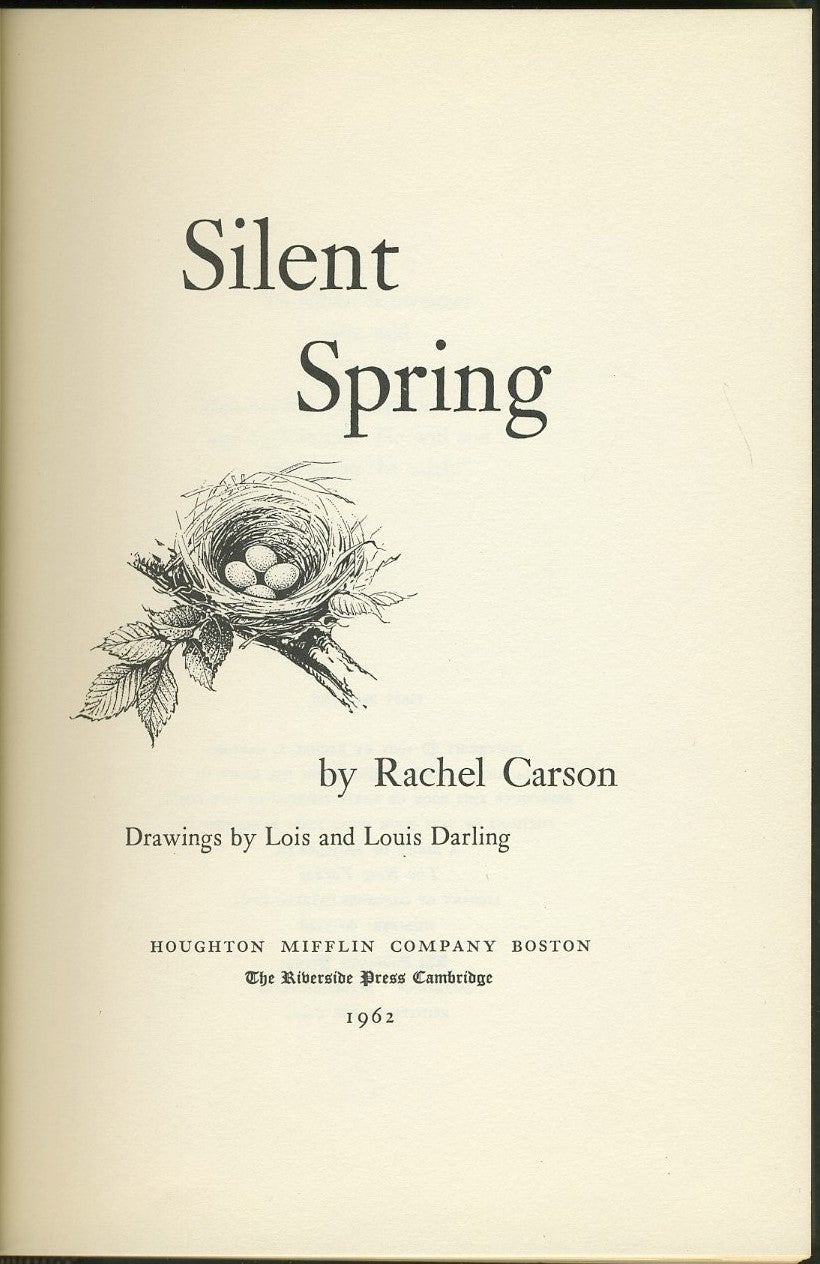


 Woman in the making